
Sustainability in Fire Door Specification: What Architects Should Consider Before Choosing a Door System
Sustainability in fire door specification is not just about choosing a product that sounds environmentally responsible. For architects, designers, and specifiers, the more useful question is: will this door system help the project reduce waste, avoid rework, perform as required, and remain compliant over the life of the building?
Fire doors are life-safety systems. They must meet strict performance requirements, and every component matters: the leaf, frame, seals, hardware, glazing, wall interface, installation method, and supporting documentation. A sustainable fire door choice is therefore one that balances environmental intent with tested performance, buildability, durability, and long-term compliance.
Why Sustainability Starts at Specification
Many waste and cost issues in fire door packages begin before procurement. If the fire rating, wall type, frame detail, vision panel, acoustic requirement, hardware set, or finish is not resolved early, the project may face RFIs, redesign, late substitutions, site modifications, or non-compliant installation outcomes.
That has a sustainability cost.
Rework uses more material, more freight, more labour, and more time. Poorly coordinated specifications can also increase the chance of replacement, delayed installation, and avoidable project waste. For this reason, one of the most practical sustainability decisions an architect can make is to specify a compliant, tested, locally supported fire door system from the start.
Soteria Doors supports this process through Masterspec work sections, specification support, tested fire door systems, PS1 availability where applicable, and design-stage shop drawing support. The goal is to help architects document the right system early, reducing uncertainty during construction.
NZ-Made Fire Doors and Local Supply
Locally made fire doors can support more responsible project delivery by reducing reliance on overseas freight, shortening communication loops, and improving access to technical support when details need to be resolved.
For New Zealand projects, local manufacture also helps specifiers work with suppliers who understand local compliance expectations, construction methods, wall systems, and site pressures. This is especially important for fire-rated doors, where an imported or substituted product may still need careful checking against New Zealand requirements, tested configurations, hardware compatibility, and installation conditions.
Soteria Doors manufactures fire doors in New Zealand and supports them with tested system information and specification guidance. For architects and builders, that local support can help reduce project risk while improving practical sustainability outcomes: fewer delays, clearer documentation, and less avoidable rework.
Material Efficiency and Waste Reduction
Sustainable specification is not only about the final installed door. It is also about how efficiently the system can be manufactured and coordinated.
Material choices can influence waste, cost, and lead time. For example, wide timber jambs, oversized vision panels, premium veneers, and highly customised details can all increase manufacturing complexity. In some cases, they may also increase material use or limit the number of compliant configurations available.
This does not mean architects should avoid custom details. It means those details should be resolved early and checked against tested fire door systems.
Soteria’s product range includes several sustainability-relevant specification options, including pine jambs for 30-minute fire doors where suitable and fire door systems tested for CLT wall applications. These examples point to a practical sustainability theme: the best outcomes come from aligning material choices, tested evidence, and design intent early.
Designing for Compliance Reduces Environmental Risk
A fire door that is manufactured, delivered, or installed incorrectly is not sustainable. If it has to be remade, modified, or replaced, the project absorbs unnecessary material use, transport, labour, and programme cost.
Compliance-led design helps avoid that.
Architects should confirm:
- The required fire rating
- Whether smoke control or acoustic performance is needed
- The tested wall type and frame configuration
- Approved hardware, seals, glazing, and drop seals
- Vision panel sizes and locations
- Installation tolerances
- Required producer statements or compliance documentation
- Whether the design needs project-specific fire testing
This is where sustainability and risk management meet. A well-specified fire door system protects life safety, supports programme certainty, and reduces the likelihood of waste caused by late-stage corrections.
Supporting Sustainable Building Goals
Sustainability-led projects often need suppliers who can contribute more than a product. They need clear documentation, tested details, technical support, and coordination with the wider design team.
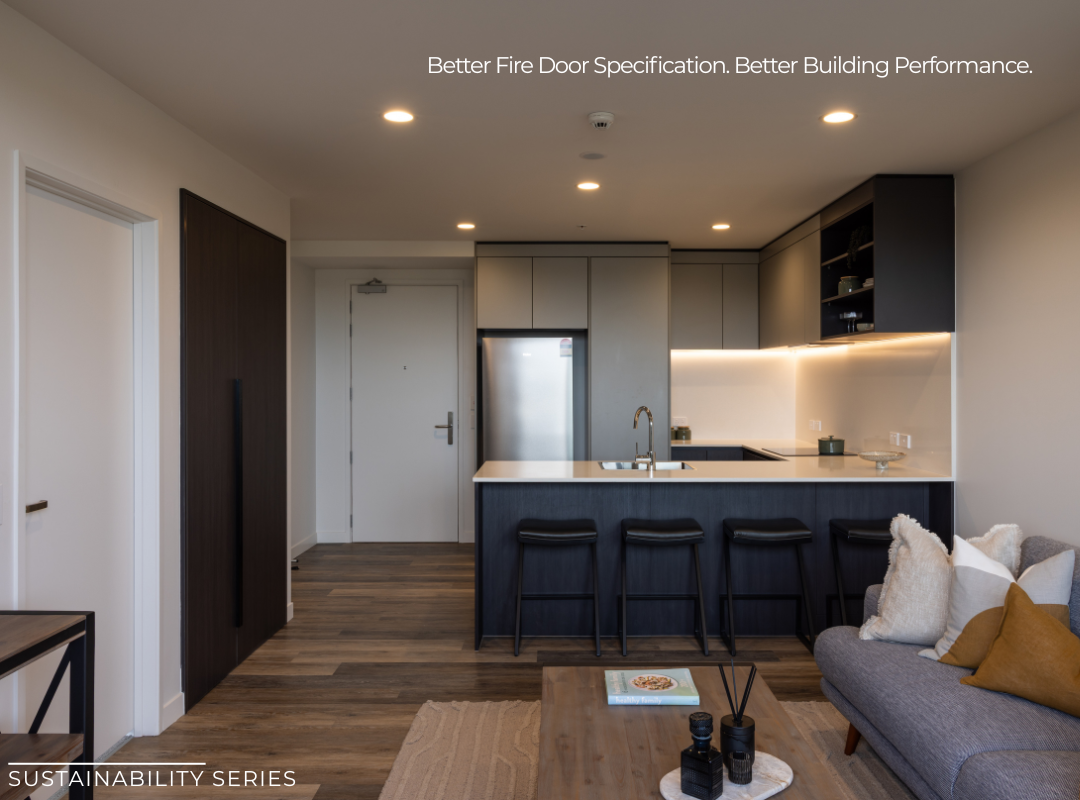
Soteria’s involvement in the Resido Sylvia Park project is a useful example. The project is described as New Zealand’s largest Build-to-Rent development, with a 9-star Homestar rating. Soteria supplied fire-rated and non-fire-rated doorsets, including seals to meet acoustic requirements, while working with the project team to maintain design intent, safety requirements, and delivery timelines.
For projects targeting Homestar, Green Star, or other sustainability outcomes, early door specification can help the design team avoid late substitutions and better understand which fire door details support the project’s environmental and performance objectives.
What Architects Should Ask Before Specifying Fire Doors
Before locking in a fire door specification, architects should ask:
Is the door system tested for the intended wall type?
The wall interface is critical. If the project uses CLT, Korok, steel stud, timber stud, masonry, or another wall system, the fire door must be suitable for that construction type.
Are the seals, hardware, glazing, and frame part of the approved system?
Fire doors perform as complete systems. Substituting components can compromise compliance.
Can the supplier support the specification early?
Early support can reduce RFIs, rework, and ambiguity during construction.
Is the product locally manufactured and supported?
Local supply can reduce freight exposure, improve technical communication, and support faster issue resolution.
Are material choices proportionate to the design intent?
Premium finishes, wide jambs, and large vision panels may be appropriate, but they should be specified with a clear understanding of cost, waste, lead time, and compliance implications.
A Practical Approach to Sustainable Fire Doors
The most sustainable fire door is not simply the one with the strongest environmental claim. It is the one that is correctly specified, efficiently manufactured, locally supported, compliant, durable, and fit for the building’s long-term use.
For architects and specifiers, that means sustainability should be considered alongside fire performance, documentation, wall systems, acoustic requirements, hardware, installation, and maintenance.
Soteria Doors helps project teams make those decisions earlier, with New Zealand-made fire doors, specification support, tested systems, Masterspec work sections, and a practical focus on reducing risk, rework, and uncertainty.
Engage Soteria Doors early in the design process to ensure fire door systems are correctly specified, fully coordinated, and aligned with your project’s performance and sustainability objectives.
Related Resources:
NZ-Made vs Imported Fire Doors